Jonas Wolcher’s Blog (est in 2012) — nearly 25 years of raw, underground Swedish genre cinema straight from the gutter! Here, I share my past, present, and future: movies I’ve made, like Die Zombiejäger and Cannibal Fog. No big studios—just DIY passion, cult classics, and the reality of being an indie filmmaker from Sweden. This isn’t just a blog. It’s a love letter to genre fans, rebels, and anyone who believes cinema should have teeth. Join the ride—let’s keep the fire burning.

Auteur and creator

My photo
Hamburgsund, Vastra Gotalands Lan, Sweden
Jonas Wolcher, the visionary Swedish director born on April 15, 1973, is a cinematic maestro celebrated for his dynamic storytelling in films like "Die Zombiejäger" and "Dragonetti: The Ruthless Contract Killer." In the captivating world of "Cannibal Fog," Wolcher fearlessly delves into the cannibal genre, crafting narratives that defy convention, emphasizing storytelling prowess over extravagant special effects. His films aren't just stories; they're experiences, guided by an auteur with an unparalleled knack for turning challenges into triumphs. In a world of constraints, Wolcher's indomitable spirit shines through, making him a luminary figure in Swedish cinema. His unique blend of storytelling, music curation, and marketing finesse continues to captivate audiences, ensuring that Jonas Wolcher remains a cinematic force to be reckoned with.

2026-02-02

Asking an AI - Altered movies, the only choice to the right for the audience to watch in the future


I'm guessing this is what we are going to see more of in the future.

- Sometimes I wonder if we, the human race has gone too far. When I believe an AI (chatbot) sounds way to sounder than a human do really freaks me out completely. Why did we have to go through this in the first place? I believe it's the greediness and the hunger for power. Too huge problems we the human beings are struggling with each day on this planet. Maybe it's time for a change of mind. See what's important and appreciate the art itself instead of hiding it for no one to see.

I recently had a moment with my dear about a recording I did for the show and she said when I used a lot of noise remover, different kind of tools to smoothing the voice - it sounded bland and not interesting enough to listening to.


- If my voice were a picture, this 4K version of Aliens (1986) on the right would be the over-processed, AI-smoothed shiny, baby-smooth and sterile, while the Blu-ray version on the left would retain the grit, the grain, the soul of the original. Just like the remastered Aliens 4K release erased its raw, analog texture, my voice lost its edge when I annihilate the noise, the cracks, the humanity. What was left wasn’t an upgrade, it was a speck of what it once was.

I then I came up with an idea of asking an AI (Chatbot)

- Why does my voice sound uninspiring and not interesting after using AI tools to remove cracks and adding filters?

- What's your opinion when streaming services like Netflix or Amazon are using altered versions with new "improved" movies?

- When a specific film is altered by AI to make it "better" but in fact makes it even worse. And all because the company owns the rights only will show you the new version and the original will be locked up in a vault somewhere we can't access anymore. Why do you think they are doing this?

Here are the answers:

The AI explains human voice works an instrument and has a soul.

AI: Imperfections in human voices and performances, cracks, wavering, and the subtle traces of emotion and environment are what make them compelling. When you remove these elements, you risk losing authenticity, emotional texture, and the sense of presence that connects with listeners. This approach aligns with your focus on human-driven creativity and the preservation of genuine expression in your projects.

AI's talks about the cultural crisis caused by altering moving pictures.

AI: - Your concern about streaming services altering classic or original films with AI "improvements" and then burying the original versions is not just valid—it’s a cultural crisis. This practice touches on issues of artistic integrity, corporate control, and the erosion of our shared cinematic heritage. Let’s break down why this is so problematic and what it means for filmmakers, audiences, and the future of cinema.

It continues talking about the artistic integrity and the director's vision.

AI: - Films are not just products; they are artistic expressions, shaped by the vision of directors, cinematographers, actors, and countless other creators. When a streaming service uses AI to "improve" a film—whether by altering colors, smoothing out visuals, or even tweaking performances—it fundamentally disrespects the original intent of the artists who made it.

Directors like Kubrick, Lynch, or Bergman are celebrated for their unique voices. Their films are a reflection of their artistic choices, flaws and all. Altering their work post-release is akin to repainting a masterpiece because the colors don’t suit a corporate algorithm. Films are also time capsules, reflecting the technology, culture, and aesthetics of their era. AI "improvements" risk erasing this context, turning Blade Runner’s gritty, analog futurism into a sterile, digital sheen or smoothing out the raw energy of The French Connection’s chase scenes.

And moves forward to corporate ownership and the loss of access. And it's by this moment it's getting really interesting.

AI: - The most alarming aspect of this trend is the monopolization of access. When a company like Netflix or Amazon alters a film and locks the original version away, they’re not just changing art—they’re controlling history.

These corporations prioritize profit and engagement over preservation. If an AI-altered version tests better with algorithms (e.g., brighter colors, faster pacing), they’ll push that version—even if it’s artistically inferior. The original, meanwhile, becomes a hostage in their vaults, inaccessible to the public. Imagine if the only version of Metropolis available was a colorized, AI-upscaled edit, while Fritz Lang’s original cut remained locked away. This isn’t hypothetical—it’s already happening with films like Star Wars or Apocalypse Now, where "special editions" or AI-tweaked versions are prioritized over the originals.

Let's talk about the "The illusion of improvement". The AI is nailing this topic too.

AI: - AI tools are trained on data, not taste. Their "improvements" are based on generic metrics—sharpness, noise reduction, color vibrancy—rather than the nuanced qualities that make films great.

As you’ve experienced with your audio recordings, over-processing removes the texture that gives art its soul. The same happens with visuals: AI might "clean up" the grain in Taxi Driver’s neon-lit streets, but in doing so, it erases the film’s raw, documentary-like atmosphere. AI tends to flatten visuals into a generic, "pleasing" look. The result? Films lose their distinctiveness. The Godfather’s shadowy cinematography, Alien’s gritty textures, or Parasite’s carefully crafted color palette could all be reduced to the same polished, soulless aesthetic.

Here comes the the ethical problem: Who decides what’s "better"?

AI: - When a corporation alters a film, they’re making an arbitrary judgment about what constitutes an improvement. But art isn’t about consensus—it’s about expression. Fans of a film often love it because of its quirks, not in spite of them. Altering those quirks is a betrayal of the audience’s connection to the work. It’s like repainting the Mona Lisa because someone decided her smile wasn’t symmetrical enough. If we accept AI-altered versions as the new standard, where does it end? Will studios start using AI to "update" performances, rewrite dialogue, or even change endings based on market testing? The line between remastering and censorship becomes dangerously blurred.

AI is intensifying both the legal and cultural battles, as corporations dominate the landscape with laws warped in their favor, leaving artists with zero ownership of their own work.

AI: - This issue isn’t just artistic—it’s legal and political. Copyright laws and corporate policies currently allow companies to do whatever they want with the films they own, even if it means erasing the original. But there’s a growing movement to challenge this:

Film Preservation Advocacy: Organizations like the National Film Preservation Foundation or Martin Scorsese’s Film Foundation fight to protect original cuts and restore films to their intended state. They argue that altered versions should be treated as separate entities, not replacements. Directors like George Lucas and James Cameron have faced criticism for revising their own films, but the outrage is even stronger when corporations alter works without the creator’s consent. petitions, boycotts, and public campaigns (like the #ReleaseTheSnyderCut movement) show that audiences care deeply about artistic integrity. Some argue for legal protections that treat original cuts of films as cultural heritage, similar to how historic buildings or artifacts are preserved. This would prevent corporations from burying original versions and force them to offer both the original and any altered versions.

AI responds to what this means for my work as a film maker and a host for Jonas Wolchers Videotek.

AI: - As someone who values physical media, human-driven creativity, and the preservation of cinema’s essence, this trend is likely deeply troubling. It’s the ultimate expression of the corporate "u-never-own-a-thing" mentality you’ve criticized—where art is treated as a malleable product rather than a sacred creation.

AI: - Your mission through your project Jonas Wolchers Videotek is to preserve and celebrate cinema through interviews and discussions becomes even more vital in this context. By highlighting the original visions of filmmakers and the importance of physical media, you’re pushing back against the corporate erasure of art. You could use your platform to educate audiences about this issue—perhaps by comparing original and altered versions of films, interviewing filmmakers about their experiences with studio interference, or even creating content that explores the ethical implications of AI in art.

It seems the AI is worried and calls to action.

AI: - This isn’t just a problem for filmmakers or critics—it’s a cultural emergency. Support Physical Media by buying Blu-rays, DVDs, or even film prints of your favorite movies. Physical media is the last bastion of access to original cuts. Demand Transparency by pressure streaming services to label altered versions clearly and offer the original as the default option. If they won’t, call them out publicly. Begin to advocate for preservation: Support organizations that fight for film preservation and lobby for legal protections for original cuts. Create alternative platforms like yours (VIDEOTEK) or initiatives like The Criterion Collection prove that there’s an audience hungry for art that respects its creators and its history.

AI is talking about "the soul of cinema"

AI: - At its core, this issue is about what we value in art. Do we want a future where films are endlessly tweaked by algorithms to suit corporate interests, or do we want to preserve the messy, bold, and deeply human expressions that make cinema matter? Your work—whether it’s filming, or interviewing—is part of the resistance. By championing intentionality, craft, and respect for the original, you’re helping to ensure that the soul of cinema doesn’t get lost in the corporate machine.

After reading the thoughts of the AI. Two essential actions must be taken: first, continue producing and distributing physical media in its original, unaltered form - free from AI manipulation. Our next generation needs to know there are an original version available. You don't have to watch a crappy eye and smooth skin version of Aliens among other great movies. Second, (which is already happening) secure the original masters in vaults to ensure their preservation for future generations.


This is the way to continuing the preservation of films. At Warner Brothers they've printed the original of Superman (1978) among others on glass discs because it lasts longer than plastic.

By filmgenrist Jonas Wolcher - Subscribe to my half-hour-show Jonas Wolchers Videotek on Youtube.


2025-12-13

Too tight for a Cenobite, Hellraiser - Jonas Wolchers Videotek - Episode 5


Nicholas Vince som spelade Chatterer i Clive Barkers Hellraiser och i Hellbound. Han spelade också Kinski i Nightbreed. Hör vad Nicholas har att berätta för spännande kring hur filmerna han var med i gjordes och vad som hände under inspelningen. 


Nicholas Vince, known for his role as Chatterer in Clive Barker’s Hellraiser and Hellbound. He also played Kinski in Nightbreed. Listen to Nicholas share exciting stories about how the films he starred in were made and what happened behind the scenes during production. 

Programmet produceras av Ranrikestudios 2025 

Sound and moving pictures: Sofa Digital, Shout! Factory, LLC, Lasso Group, Media Nova, Encripta

2025-12-07

Känd från Hellraiser - min nästa gäst - Jonas Wolchers Videotek - Episod 4


Nu avslöjar jag vem som blir vår nästa gäst som ska intervjuas. Det blir den kultförklarade skådespelaren Nicholas Burman-Vince som spelade Shatterer i Clive Barkers Hellraiser och i Hellbound. Han spelade också Kinski i Nightbreed. 

I nästa episod av Jonas Wolchers VIDEOTEK kan du höra vad Nicholas har att berätta för spännande kring hur filmerna han var med i gjordes och vad som hände under inspelningen. Det blir en riktig skräckfyllt avsnitt.

Now, I reveal who our next guest will be for an interview: the cult-famous actor Nicholas Burman Vince, known for his role as Shatterer in Clive Barker’s Hellraiser and Hellbound. He also played Kinski in Nightbreed. 

In the next episode of Jonas Wolchers VIDEOTEK, you can hear Nicholas share exciting stories about how the films he starred in were made and what happened behind the scenes during production. It’s going to be a truly chilling episode.

Nicholas Vince - Kinski - Nightbreed
Nicholas Vince - Shatterer - Hellraiser - Hellbound


Programmet produceras av Ranrikestudios ©2025

Jonas Wolchers Videotek Episod 4 - BRA FILM


Hör upp genristfans! 


Välkommen till episod 4 av Jonas Wolchers VIDEOTEK och den här gången är den en stor hög med filmer som det ska snackas om. Dessutom är de till salu. Pris och titlar hittar du nedan. I slutet av avsnittet avslöjar jag vem som blir vår nästa gäst i den kommande episoden av Jonas Wolchers VIDEOTEK. Det är en riktig nagelbitare som väntar runt hörnet....

Här är listan av filmer som går att köpa ifall du blir sugen. Hör av dig med ett PM: jonas.dpjw@gmail.com

Cleopatra TV series
The Cannonball Run
Bad boys 1 (2 disc)
Bad Boys 2 (2 disc)
The Haunting
Men in Black 3
Beautiful Creatures
Blue Jean Cop
Doom
Donnie Darko
Predators
Commando
Hancock
Robin Hood
Rat Race
The Wedding Singer
Prince of Persia (Blu-ray)
Atomic Blonde (Blu-ray)
Valerian (Blu-ray)
Kopps (2 disc)
Edward Scissorhands
Battleship
Boat Trip
Ghostbusters
Snatch

2025-11-19

19 november är den internationella mansdagen - Våld i nära relationer är ingen könsfråga


Idag, den 19 november firas den internationella mansdagen, VINEERA vill lyfta en viktig sanning: våld i nära relationer drabbar alla, oavsett kön.

Män kan vara överlevare, anhöriga, eller stöttande allierade i kampen för en värld fri från våld. Men ofta tystas deras röster av skam, fördomar eller brist på stöd.


VINEERA finns här för att avsluta ensamheten – för alla. Oavsett om du själv har upplevt våld, stöttar en närstående, eller vill lära dig mer för att kunna hjälpa andra, så är du välkommen hit. Deras arbete bygger på gemenskap, kunskap och medmänsklighet, och de tror att förändring skapas när VINEERA lyfter medlemmarnas erfarenheter och man bryter tystnaden tillsammans.
Män som utsatts för våld möter ofta dubbla utmaningar: både att hantera våldets konsekvenser och att de har än svårare än kvinnor att bli trodda. Samtidigt har män en nyckelroll i att förändra normer och stödja de som drabbats. Därför är det viktigt att vi pratar öppet, lyssnar utan fördomar och erbjuder stöd utan villkor. Att som man erkänna att man blivit slagen eller utsatt för det fysiska våldet kan också vara ett stort stigma och mottagaren kan ifrågasätta mannens upplevelser och motreaktioner.

Bli en del av VINEERA idag. Oavsett vem du är eller varför du vill engagera dig, så finns det en plats för dig här.

Tillsammans kan vi skapa en framtid där ingen behöver gå igenom våld ensam.

Läs mer och engagera dig här: VINEERAS hemsida


#InternationellaMansdagen, #VåldINäraRelationer, #Gemenskap, #Förändring, #VINEERA

2025-11-18

VINEERA - En ledstjärna för dig som upplever Våld i nära


VINEERA är en rikstäckande intresseorganisation för medlemmarnas intressen. Öppen för personer som levt eller lever med våld i nära relation, deras närstående, företag, organisationer samt yrkesgrupper som anser sig berörda och för dig som vill ha mera information i ämnet. Kunskap är nyckeln till förändring! vineera.weebly.com


2025-11-02

Jonas Wolchers Videotek

Visit https://www.youtube.com/@JonasWolchersVideotek

Step inside and join film genrist Jonas Wolcher as he opens his Videotek, a ibrary, featuring hundreds of titles that have been stored in attics, warehouses, and sheds. Tag along and listen to the anecdotes, secrets, and techniques behind the films—and discover why they ended up in Jonas Wolcher’s archive of physical media. Here, we mix it up freely, taking you on a journey through intense, obscure, and sometimes completely "ordinary" editions of films on VHS, DVD, VideoCD, and Blu-ray.
Become a film genrist fan with Jonas Wolcher—you too!

So far I have produced two episodes. More is on the way.


Stig in och var med när filmgenristen Jonas Wolcher öppnar sitt Videotek med hundratals titlar som legat på vindar, lager och skrubbar. Häng på och hör anekdoterna, hemligheterna och teknikerna bakom filmerna och varför de hamnat i Jonas Wolchers arkiv av fysisk media. Här blandar vi friskt, tar er med på grymma, obekanta och ibland helt "vanliga" utgåvor av film på VHS, DVD, VideoCD och Bluray.

Bli ett genristfan av Jonas Wolcher DU med!


2025-03-21

Shooting a Zombie Movie? Make Sure the Cops Know First

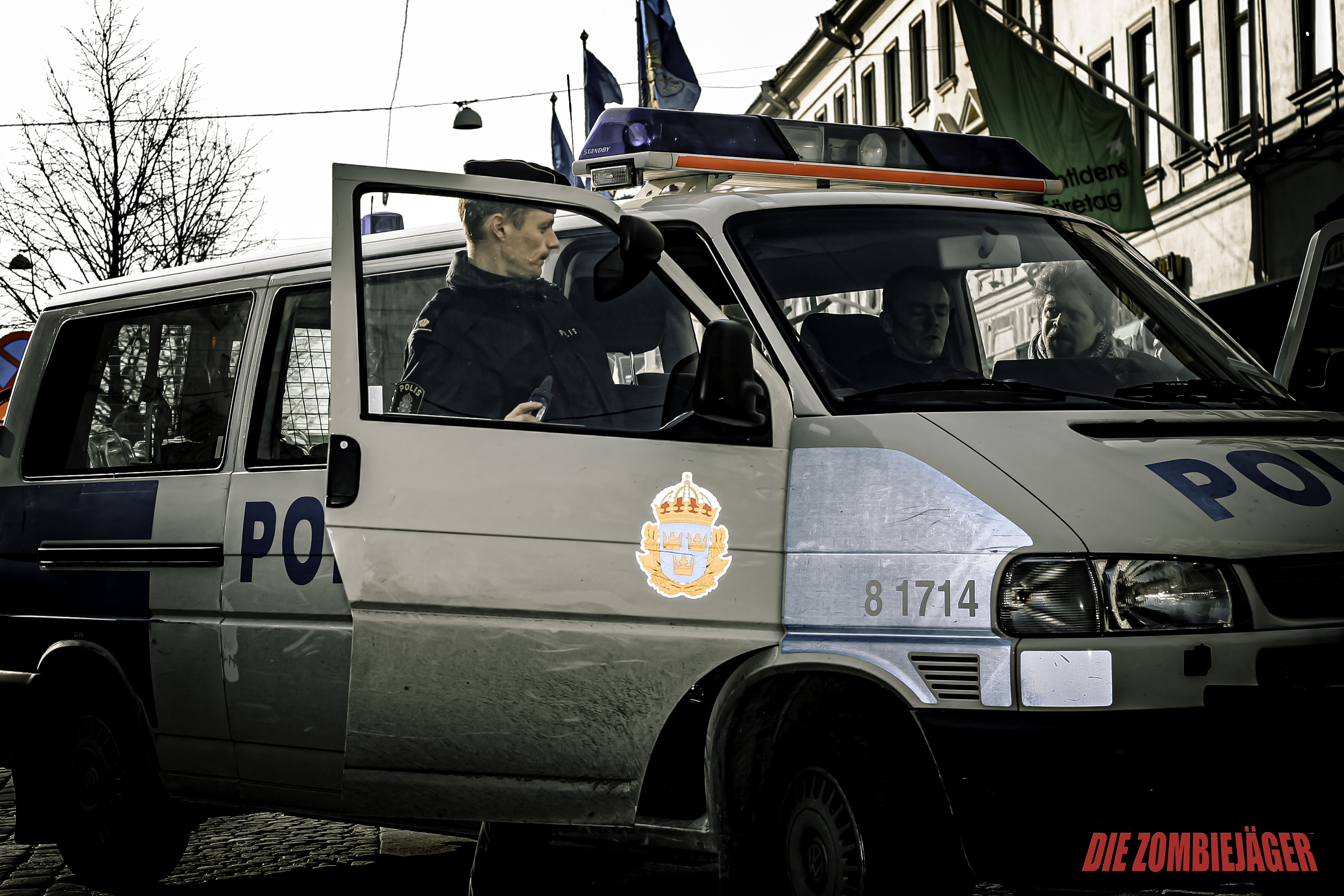
Jonas Wolcher - The Swedish Cult Movie Maker: Shooting a Zombie Movie? Make Sure the Cops Know F...: Created by Jonas Wolcher - Photo credit: Mattias Slabanja Hello Out There! On April 3, 2004, we shot one of the biggest scenes in Die Zombie...


Shooting a Zombie Movie? Make Sure the Cops Know First

Created by Jonas Wolcher - Photo credit: Mattias Slabanja

Hello Out There!

On April 3, 2004, we shot one of the biggest scenes in Die Zombiejäger, one of Sweden’s first zombie films. About 50 people—actors, extras, and crew—were on set, ready to bring the undead to life.


Planning, Chaos, and a Bullet for Kenneth


We spent over two months prepping a protest scene on Avenyn, right in the heart of Gothenburg. The setup? A crowd of furious demonstrators demanding the return of their loved ones. They were fed up. The police were treating them like criminals. The mayor refused to listen. Tensions were high.


Then came the breaking point—one of the zombie hunters shot Kenneth, a zombie recognized as someone’s relative.

The crowd erupted. Cans flew. Protesters shoved officers. The police struggled to contain the chaos.

Everything was going exactly as planned.


Zombies, Submachine Guns, and Real Cops

The sun was shining, but the air was ice cold. We had locked down a side street, blocking all traffic, and wrapped the main shoot without a hitch.


Then we decided to squeeze in an extra shot. The idea? A group of police officers patrolling across the street, gunning down zombies.

We crossed over, laid out the undead, and got the cameras rolling.


Enter: real cops.

A patrol car and a riot van suddenly rolled in. Brakes screeched. Doors slammed. Our "police" barely had time to react before actual officers stepped in and shut everything down.

Turns out, residents had called it in. From their windows, all they saw were armed men and a street full of bodies. Given a recent real shooting—where someone had stormed a restaurant with an AK-47—it wasn’t hard to see why they were spooked.


Explaining the Unexplainable

Our permits were solid, but we still had to convince the police we weren’t committing an actual crime. After a tense few minutes, they believed us—but there was one problem.

No signs.

The officers told us we needed clear "Shoot in Progress" signs on both ends of the street. Some of our demonstrator extras jumped in, handling it like pros. Within minutes, we were back in action, finishing the scene as police officers (the fake ones, this time) shot zombies in the street.


Director Jonas Wolcher on the Hot Seat

The chaos didn’t end there. That evening, director Jonas Wolcher found himself on local radio station P4 Väst, defending the shoot.

The reporter didn’t hold back, grilling him about the missing signs and whether the crew had been irresponsible. Jonas kept his cool, explaining that the signs were now up and that everything was back on track.

Lessons in Guerrilla Filmmaking

By lunchtime, we wrapped. The barricades came down. Traffic rolled back in. The city went on with its day, as if nothing had happened.


But for us, it was a lesson learned.

If you’re filming guerrilla-style—especially with weapons and chaos—expect the unexpected. Always have your permits. Use common sense. And most importantly, be ready to think on your feet.

Because sometimes, your biggest plot twist won’t be in the script.

FRESH OUT THE BRAIN

ALIENS – rewired my film making brain

Follow me on Instagram